
News
A Conversation with Sister Cynthia Canning About Holy Names High School
Sister Cynthia Canning, SNJM is the Chair of the Holy Names Educational Ministries Board and a former teacher and principal at Holy Names High School. She is also an alumna of the school. Established in 1868, Holy Names High School is a Catholic school for young women located in Oakland, California. It provides an academically challenging college preparatory education in a vibrant learning environment, nurturing spirituality, encouraging artistic expression, and promoting justice.
1868: The Courageous Journey of the Pioneers
What can you tell us about the story of Holy Names High School?
It’s a very long story. It goes all the way back to 1868, which was 25 years after our community was founded in Quebec (Canada) by Blessed Marie-Rose. In the mid1860s, Archbishop Alemany from San Francisco made a plea to our community, asking for Sisters to come to the city. After a very long, arduous journey – they took a ship down the East Coast and then a train across the Panama Canal, and then another ship up to San Francisco – six young, mostly French-speaking Sisters arrived in 1868.
They were welcomed by the Sisters of Mercy who served them strawberries – a very special treat for these Sisters from Quebec, where fresh strawberries would not be available until late June at the earliest. This was the beginning of Strawberry Day every May 10th, the day the first Sisters landed in San Francisco. The day is celebrated across all of our ministries, with strawberries, strawberry ice cream, or strawberry shortcake as we remember our California SNJM history.
How did we get to Oakland? My understanding is that the San Francisco Archdiocese wasn’t quite ready when we arrived. However, Father Michael King, a pastor in Oakland, really wanted a school, and invited us to begin it. Legend has it – though I’m not sure how much is strictly true – that Father King sold his horse and his coat to buy lumber, and began digging in the soil on church-owned property near Lake Merritt. With the help of others, they built a convent that served as the original home for the school, then called the Convent of Our Lady of the Sacred Heart. By 1930, the campus became over crowded with the addition of junior and four year college divisions.
1931: Establishing the Current Campus
In 1931, the high school division moved to our current campus. While a local pastor encouraged the move with the hope that other parishes would financially support what he wanted to call ‘Holy Names Central High School,’ that support didn’t materialize as expected. From the very beginning, our Sisters faced financial challenges. Yet, they were courageous and smart, and they made it happen. This campus remains a symbol; it has never been financially easy, but we have always managed to keep going and keep serving through creativity and wonderful support. We have also always provided significant financial support for young women who might otherwise not be able to experience all that Holy Names High School is. I was actually one of those scholarship students.
A Mirror of Oakland’s Diversity
You were a student at Holy Names. What has changed since then?
I graduated 65 years ago in 1961, and so much has changed. When I was a student, most of the faculty and administrators were Sisters. Students were almost entirely Caucasian. Today, the demographics have evolved to reflect the beautiful diversity of Oakland. This is the most diverse high school community the Holy Names Educational Ministries sponsor. It is currently 11% Asian, 26% Black, 25% Hispanic and 17% White.
This diversity is celebrated in ways that allow students to learn about and value each other’s cultures, never considering anyone better or less than another – a message our world needs. Our faculty and staff are also the most diverse in our network, which is vital because when students see themselves reflected in their teachers, they can imagine themselves in those same roles.
Transforming the Future
Do you think this high school makes a difference in its community?
I think it does, and it will. We are forming young women of various backgrounds who are already leaders and will continue to be leaders. They possess a moral compass and are sustained by faith; even for those of other faiths, which are highly respected here, they are encouraged to live out their values. They enter as little girls and leave as powerful young women who believe in their potential to do good. Furthermore, about 80% of our students receive need-based financial aid, which I believe is a matter of justice that will change our world.
It is noteworthy that the accrediting team that visited this year after two years of preparation described the school’s mission is ‘an osmosis’ here. It is in the walls. The students experience it in the way their teachers and staff behave and relate to them and to one another, and in how the school is run overall.
Would you say “mission accomplished” regarding the goals of the first Sisters in the 1860s?
Oh, absolutely! Yes, I would say mission accomplished and let’s keep going! The leaders and faculty here embrace the charism and core values of the Sisters. They don’t just do it as a job; they embody, teach, and lift up those same values. It is embedded in this school, and I am very, very proud.
What are your hopes for the future of Holy Names High School?
I hope that it will continue to thrive and remain totally committed to the values we stand for, as it has been all these years. I believe it will, because of the people we have in place and the work the Holy Names Educational Ministries is doing to ensure that continues into the future.
Originally published on snjm.org: https://snjm.org/en/blog/2026/06/12/mission-accomplished-and-lets-keep-going-a-conversation-with-sister-cynthia-canning-about-holy-names-high-school/
The Largest Collection of Spanish Language Literature in Northern California
Statement on the Dignity of the Human Person
Sisters of the Holy Names of Jesus and Mary U.S.-Ontario Province Statement on the Dignity of the Human Person
The Sisters of the Holy Names of Jesus and Mary U.S.-Ontario Province are relieved that the livestream of Nidal Hasan’s execution by firing squad has been canceled, however, this does not change our fundamental and unwavering opposition to the death penalty. We believe that every human life has inherent dignity and worth, and that justice must uphold these principles rather than take another life.
We join the Leadership Conference of Women Religious (LCWR) and the United States Catholic Conference of Bishops (USCCB) in resisting violence in every form, including the death penalty.
We affirm LCWR’s recent statement on the Dignity of Human Life and Nonviolence that “We are called to stand against violence in all its forms and to proclaim the urgent necessity of nonviolence in both word and action. This commitment challenges us to examine how violence is practiced, witnessed, and sometimes normalized in our society.”
We hold deep compassion for all those affected by violence, while remaining steadfast in our conviction that every human life is sacred, precious and deserving of dignity. As Pope Leo XIV reminds us, “The dignity of the person is not lost even after very serious crimes are committed.”
May we continue to meet suffering with compassion, respond to violence with a commitment to justice and peace, and maintain a deep respect for the sacredness of human life.
Read LCWR’s full statement here.
Read the USCCB President’s statement here.
Sisters of the Holy Names of Jesus and Mary
U.S.-Ontario Province Leaders,
Maureen Delaney, SNJM
Diane Enos, SNJM
Carol Higgins, SNJM
Marcia Frideger, SNJM
Connie Harrington, SNJM
Daleen Larkin, SNJM
Linda Patrick, SNJM
Mary Slater, SNJM
Aziza’s Army: The Long Echo of Care
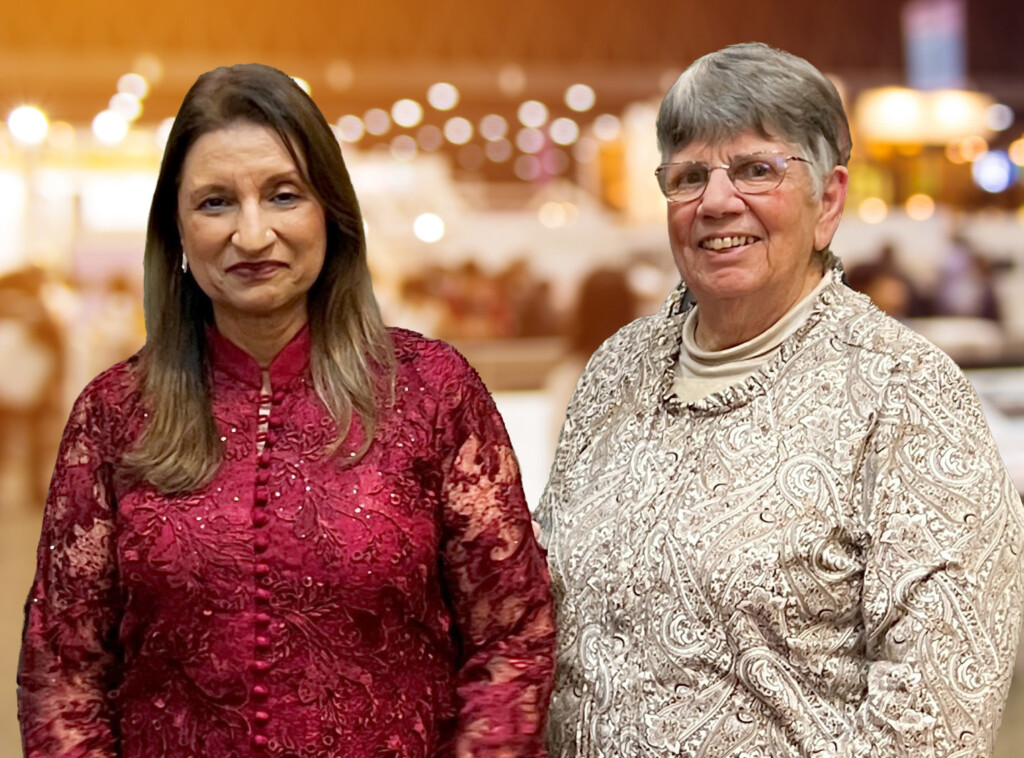
Dr. Aziza Shad and Sister Pat Parachini.
The end of treatment is not always the end of care. Sometimes, it is where something lasting begins, a circle of support that takes root and becomes a community. Sister Pat Parachini and the people drawn together through pediatric cancer care still gather years later, carrying with them faith, memories and hope.
Now retired, Sister Pat Parachini worked as a Chaplain at Georgetown University Hospital from 1997 to 2003 with families who had a child with cancer. Chaplaincy in pediatric cancer care is a practice of presence, showing up without trying to “fix” what can’t be fixed in the moment. A few of the children Sister Pat worked with are now in their 30s, including one she met when he was two years old.
In 2026, Sister Pat is still part of the community support group made up of mothers whose children had cancer and were treated by Aziza Shad, M.D., who is now the Chair of Pediatrics, and Chief of the Children’s Hospital at Sinai Hospital in Baltimore, Maryland. The group is known as Aziza’s Army. Their connection is not only about looking back, it’s also about staying alert to what comes after. Continuous care becomes its own kind of comfort: a familiar clinician, prayers that don’t cease and a sense that nobody is left alone with the “what ifs.”
Sister Pat’s years of employment at the hospital mattered, and so does everything that comes after—the friendships that held, the mothers who stayed connected and the doctor who remained a trusted anchor. That is the long-term impact of compassion: it doesn’t just comfort people in the hardest chapter, it helps them keep writing the next ones.
The History of Mary’s Woods
In 2001, SNJM established Mary’s Woods in Lake Oswego, Oregon. This documentary examines the path to opening a continuing care retirement community.
Villa Maria del Mar
Imbued with the Ministry of Hospitality
For over 60 years, Villa Maria del Mar, the SNJM retreat center situated on the shores of Monterey Bay, California, has provided a peaceful, prayerful and renewing space for individuals and groups.
Purchased from the Catholic Ladies Aide Society, who operated the facility as a hotel from 1892 until 1963, the Sisters renamed the building Villa Maria del Mar. On October 31, 1963, Father John Shanks, S.J. and a group of retreatants from Santa Clara University became the first group to experience the new retreat center. Thus began sixty years of ministry.
Today the Villa continues to be a house of hospitality welcoming non-profit organizations, religious congregations, diocesan and ecumenical groups, 12-step programs, worship communities and individuals seeking a beautiful and serene space for prayer, planning, healing, rest and relaxation. The Sisters, Associates and staff at Villa Maria are enriched and inspired by the many guests who experience the Villa for the first time and by others who return for many years of retreat and/or renewal.
The Villa serves as a place of retreat and relaxation for many Sisters of the Holy Names throughout the Congregation. Our Sisters participate in retreats, meetings, conferences and vacations at the Villa.
Located on the property is an original chapel that is used by Villa guests as well as by a worshipping community each weekend. In addition to the weekly liturgy, the Villa Chapel Community participates in food drives and sock and bedding collections for the unhoused in Santa Cruz County and supports the local St. Vincent de Paul Society.
Click here to visit the Villa Maria del Mar website.
Click here to view the Upcoming Retreats page of the Villa website.
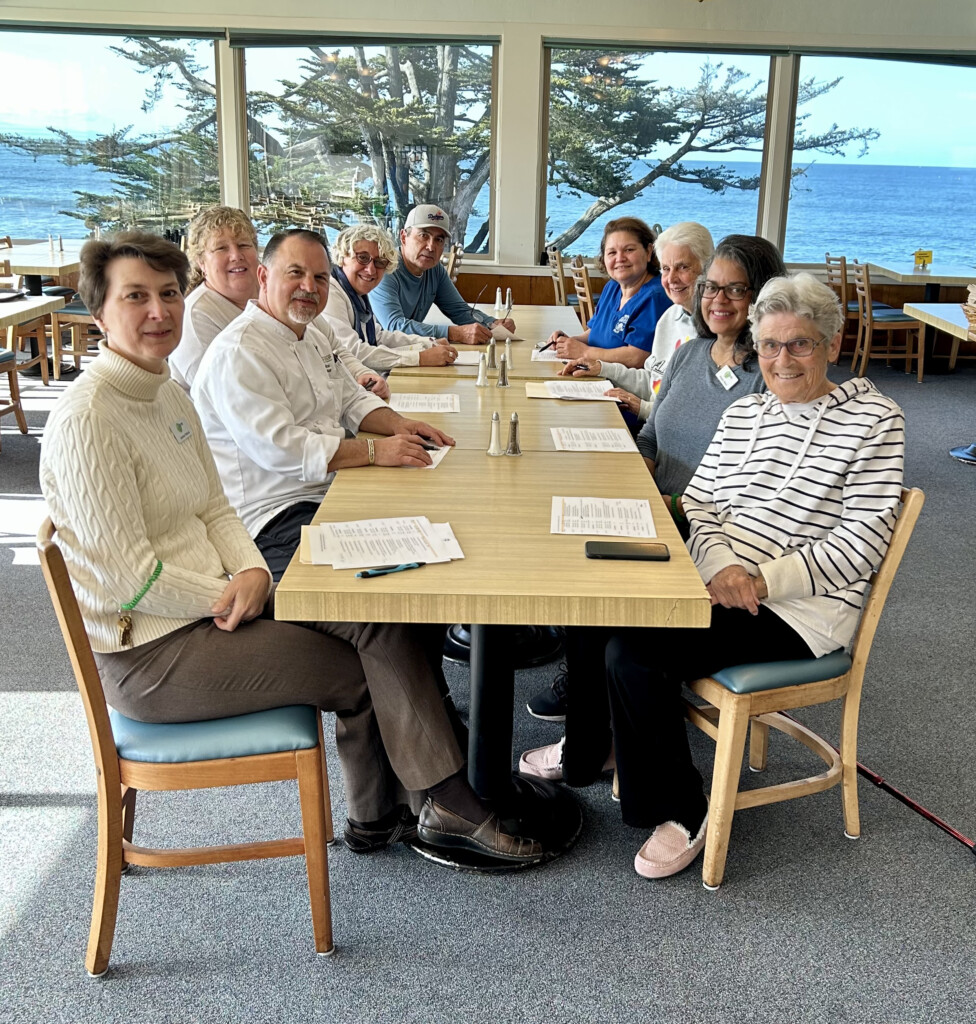
Sisters and staff at Villa Maria del Mar work hard to live the value of Hospitality as a Ministry. Here they are, preparing to welcome guests: (left to right) Joanna, Jeff, Mary, Sister Michelle, Alex, Carmen, Sister Mary, Virginia and Sister Mimi.
Land, Language and the Salish Future
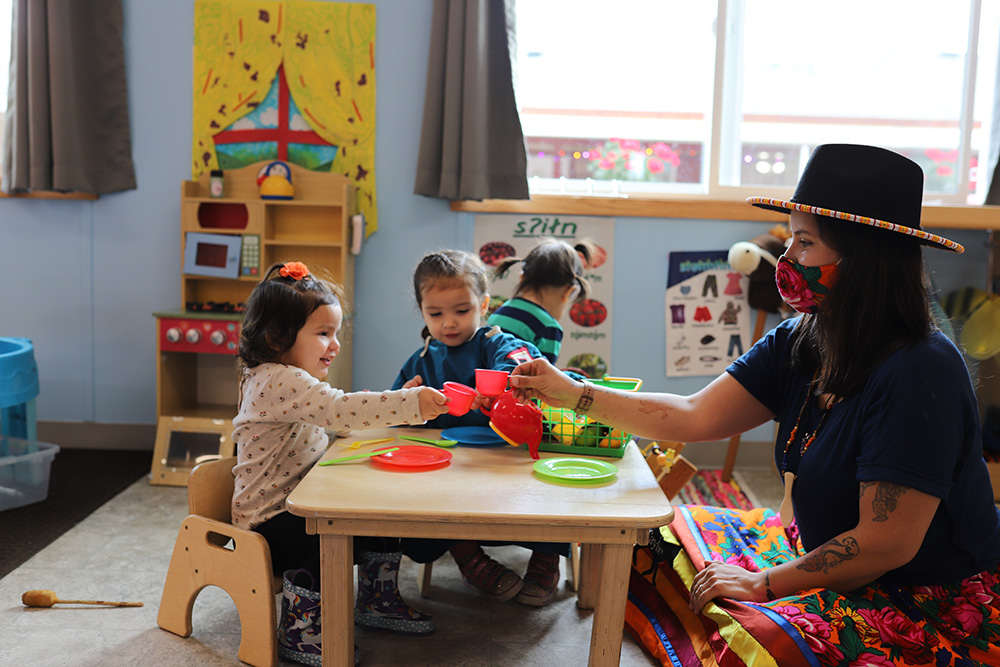
A teacher works with students at the Salish School of Spokane.
The gift of two and a half acres of land to the Salish School of Spokane carries meaning far beyond new buildings. The land, once part of the grounds surrounding the convent of the Sisters of the Holy Names of Jesus and Mary, rests along a stretch of the Spokane River where Salish people historically sustained their community. The Salish, a major Indigenous group, have long inhabited a vast region of the Pacific Northwest, including present-day Washington, Idaho, Montana, British Columbia and parts of Oregon. Donated by Catholic Charities of Eastern Washington, the land’s return to Salish stewardship stands as a meaningful act of preservation and restorative justice.
Founded in 2009 by five Southern Interior Salish women, the Salish School exists to revitalize critically endangered Salish languages and culture. All subjects are taught in the Colville ’ Salish language, including courses in chemistry, math, music, art and history. Enrollment in the school is a family commitment, with parents also required to spend 60 hours per year studying Salish. The new campus will allow the school to expand, providing more classrooms and meeting space as well as a cultural community center. Adjacent to the new Salish School campus, Catholic Charities of Eastern Washington is building “River Family Haven,” a 72-unit supportive housing development for low-income families. At the end of the 15-year investor period, the housing development will also be donated to the Salish School of Spokane. The ultimate vision is to create a Salish village where language, culture and daily life come together.
For co-founder LaRae Wylie and school principal Chris Parkin, this project is the realization of a lifelong dream. It reflects a shared commitment by the school, Catholic Charities and the wider community to honor the past, care for the land and build a future where Salish language, culture and people can thrive. To learn more about the Salish School of Spokane and the new campus project please visit salishschoolofspokane.org.
Rossbrook House Turns 50
On January 20, 1976, SNJM Sister Geraldine MacNamara and a group of young men from Winnipeg’s Centennial neighborhood founded Rossbrook House as an alternative to the streets. Their vision was to create a safe space for young people when other doors were closed. Sister Geraldine inspired all who walked through the open doors at 658 Ross Avenue, and although she passed away in 1984, her spirit remains forever a part of the legacy—and the future—of Rossbrook House.
While receiving the Order of Canada (1983) for her work founding Rossbrook House, Sister Geraldine articulated the guiding principle: “No child who does not want to be alone should ever have to be.”
She would have been the first to say that Rossbrook House was never her dream alone, but rather the dream and creation of the young people she met on the streets near her home in Winnipeg’s inner city in the early 1970s.
The operational philosophy, then and now, is based upon two fundamental principles: self-help and self-referral. Rossbrook staff are drawn from the community of regular attendees, allowing for a realistic understanding of the participants’ needs and aspirations. The hopes, dreams, and ideas of the youth are what determine the programs and direction of the centre.
You can learn more about Rossbrook House at rossbrookhouse.ca
Read more about Rossbrook House in this article by the CBC: Winnipeg youth drop-in centre Rossbrook House a ‘home away from home’ for 50 years, executive director says
Originally published on snjm.org on Jan. 21: https://snjm.org/en/blog/2026/01/21/rossbrook-house-turns-50/
Prayer, Presence and the Work of Justice
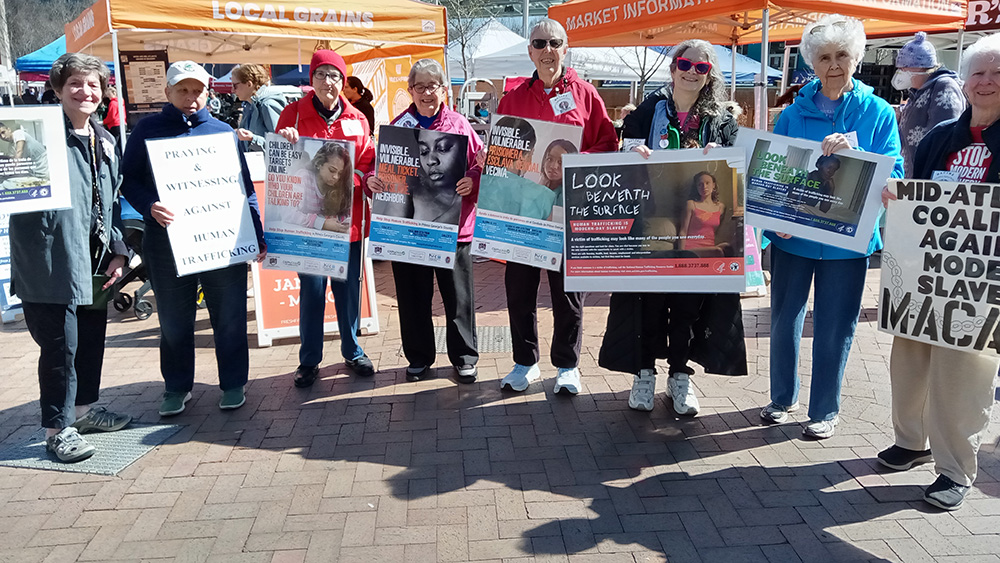
A MACAMS gathering in 2024.
More than twenty-five years ago, SNJM Sisters Carroll Ann Kemp and Carol Ries invited a few women to gather in their home to learn, to listen and to understand the growing reality of human trafficking. At the end of that first meeting, Sister Carroll Ann offered a quiet challenge, “What if, next time, each of us brings one more person?”
When they met again, the group had more than doubled. What started as concern quickly became commitment. From that living room gathering, the Mid-Atlantic Coalition Against Modern Slavery, MACAMS, was born.
As the work of MACAMS unfolded, it echoed a wider movement within the Congregation of the Sisters of the Holy Names of Jesus and Mary. In 2004, the Congregation issued a Corporate Stand against trafficking of women and children, committing all Sisters to this justice ministry.
In the years since, MACAMS has grown into a diverse, interfaith coalition active throughout the Washington, D.C. area. While it began with Catholic religious women, it soon expanded to include lay people of many faith traditions. “Our diversity is a gift,” Sister Carol says. Ending human trafficking requires all of us.
The mission of MACAMS is rooted in prayer, education and advocacy. Members create a network of care behind the scenes. When someone reaches out for help, the coalition connects them with trusted resources like the Polaris Project’s U.S. National Human Trafficking Hotline or The Alliance to End Human Trafficking. One woman came to them from California, unaware that her own uncle trafficked her to Washington D.C. Through the MACAMS network of relationships, she found legal help and a path toward safety and healing.
Every other month, a small group gathers to stand on street corners, holding signs and praying together. Their presence is quiet but unmistakable. The goal is to provide awareness that trafficking is happening here, in our own communities, not “somewhere else.” On alternate months, the group meets to learn together, plan advocacy efforts and welcome speakers. They visit legislators, educate parishes and speak with students, knowing awareness might one day help someone else.
The work to end this crime is challenging. Trafficking is lucrative, global and relentless. Prayer and community are what continue to support the MACAMS members in their efforts. Sister Carol shares, “We don’t let it keep us down; we persevere. If even one person is helped through our actions, it was worth it.”
St. Mary’s Alum Wins Nobel Prize
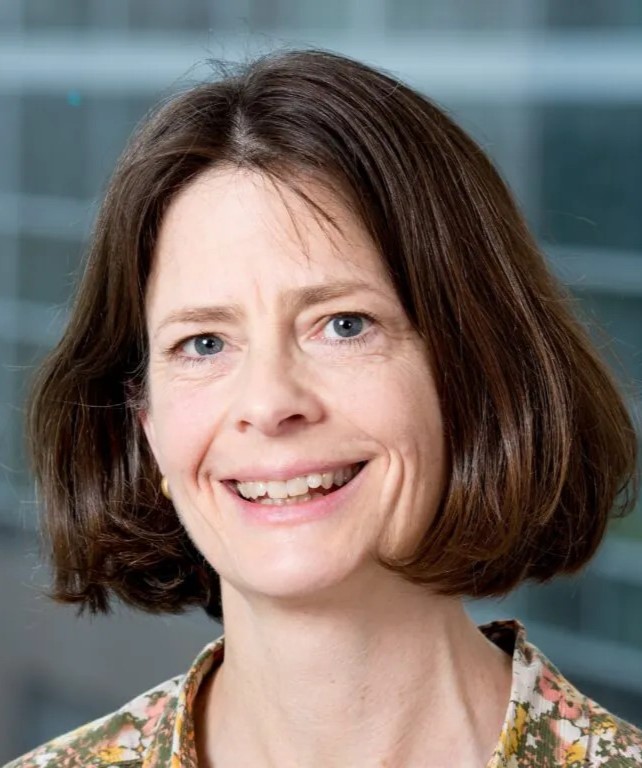
Nobel laureate Mary Brunkow, St. Mary’s Academy class of 1979.
“Listen to your gut, your heart, or wherever you get hit when you think you’re really interested in something.” Mary Brunkow shared that advice with students at St. Mary’s Academy, her alma mater (class of ’79). It’s good advice from anyone, but coming from a Nobel laureate, you might listen extra hard. Now students are more excited than ever about their science studies after the news of Brunkow’s 2025 Nobel Prize for Physiology or Medicine.
Brunkow is currently a molecular biologist at the Institute for Systems Biology in Seattle and shares the Nobel with Fred Ramsdell and Shimon Sakaguchi. The group was collectively awarded for their work discovering a class of immune cells that help to prevent the body from attacking its own tissues, providing fundamental knowledge of how the immune system is regulated. Brunkow called the work “an amazing team effort.”
Since the opening of the SNJM allgirls school in 1859, each generation of St. Mary’s students has been surrounded by supportive women, from the caring faculty and staff who nurture the community to the driven alumni who pioneer new paths. For students in the midst of their STEM (Science, Technology, Engineering and Mathematics) education, Brunkow achieving the highest award in her field is huge news. As the St. Mary’s community celebrated news of Brunkow’s Nobel, senior Tuula remarked, “It goes to show that anyone here can go on to do anything. As someone who wants to go into STEM, it’s really inspiring.”
Brunkow has commended the high school community that helped her cultivate her academic growth, including her teachers Sister Mollie Reavis and Sister Rosemary Anne Parker. She has also acknowledged the role models, career mentors and women in science who gave her “the courage and incentive to persevere.” Now it’s Brunkow’s turn to inspire the next generation. In her Nobel acceptance speech, she shared, “My hope is that I, in turn, can be that role model for my own daughters, as well as for the other young women who are excited about science.”